
Two-wheelers are an essential part of everyday travel for millions of Indians. Whether you use a motorcycle or scooter for commuting, errands or occasional trips, having valid insurance is an important part of responsible vehicle ownership. But what happens if you forget to renew your policy and your two-wheeler insurance expires?
An expired insurance policy can leave you exposed to legal consequences as well as unexpected financial costs. Understanding the implications and knowing what to do after an insurance lapse can help you get your coverage back without unnecessary complications.
Is It Legal to Ride Without Valid Two-Wheeler Insurance?
In India, third-party motor insurance is mandatory for two-wheelers under the Motor Vehicles Act. If your policy has expired, you should not ride your bike or scooter on public roads until you have valid insurance again.
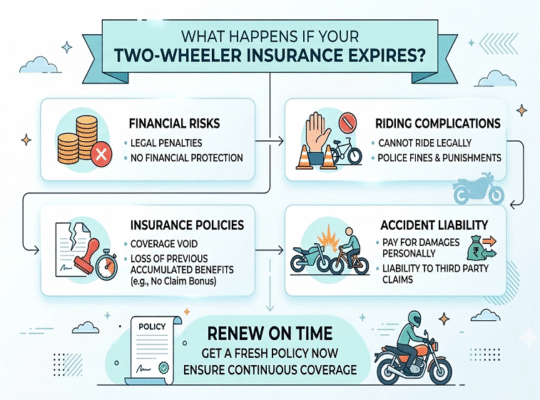
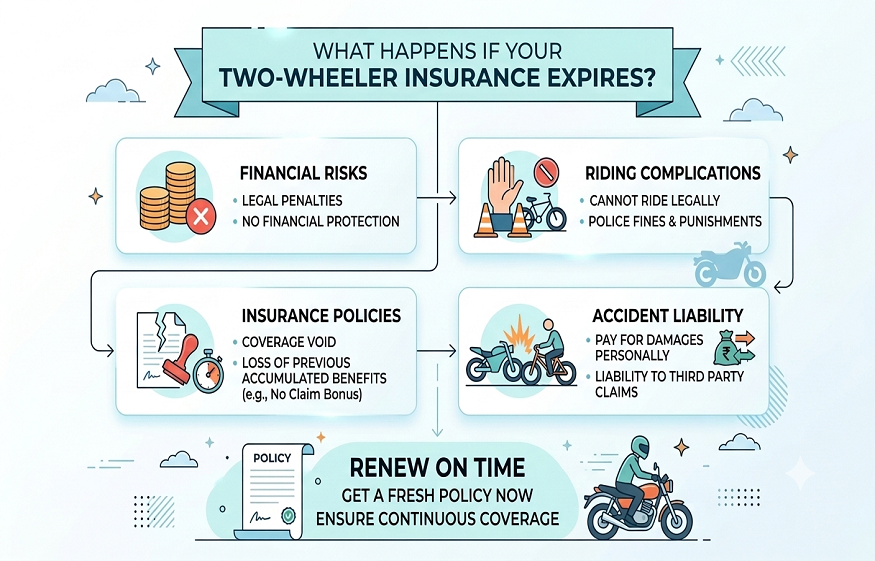
Riding without mandatory third-party insurance can result in penalties. More importantly, if you are involved in an accident while uninsured, you may have to bear eligible third-party liabilities and other costs from your own pocket.
This makes timely renewal an important part of responsible two-wheeler ownership.
What Happens When Your Bike Insurance Expires?
Once your policy expires, the protection provided by the expired policy generally stops. This means you cannot assume that your previous policy will cover an accident, theft or other incident that occurs after the expiry date.
If you have an own-damage or comprehensive policy, the own-damage protection also does not continue simply because the vehicle was previously insured.
For this reason, avoid using your two-wheeler until you have renewed or purchased valid insurance.
Can You Renew an Expired Two-Wheeler Insurance Policy?
Yes, you can generally renew your two-wheeler insurance even after the previous policy has expired. However, the process may differ depending on how long the policy has been inactive and the insurer’s requirements.
If the policy has recently expired, you may be able to renew it relatively easily. Depending on the circumstances, the insurer may require a vehicle inspection before providing certain types of coverage.
Importantly, renewal does not normally provide retrospective protection. If an accident occurred during the period when your policy was inactive, purchasing a new policy afterwards will not make that earlier incident insured.
Read More: Gold Loans And Savings Culture Across Indian Towns
What About Your No Claim Bonus?
If you had accumulated a No Claim Bonus (NCB) because you did not make claims during the previous policy period, don’t assume that it will remain available indefinitely after a policy lapse.
NCB eligibility is subject to applicable terms and timelines. A significant delay in renewal can affect your ability to retain the accumulated benefit.
Therefore, renewing your policy on time can help you avoid complications related to both coverage and accumulated benefits.
Will an Expired Policy Affect Your Insurance Premium?
An expired policy does not necessarily mean that your future premium will automatically increase. However, several factors can influence the price of your renewed policy.
These may include:
- Your vehicle’s age and model
- Engine capacity
- Insured Declared Value (IDV)
- Location
- Previous claims
- Selected policy type
- Add-on covers
- Applicable discounts or NCB
The length of the policy lapse and whether an inspection is required can also affect the renewal process.
Instead of focusing only on the premium, compare the coverage and policy terms before renewing.
What If You Have an Accident After Insurance Expiry?
This is one of the biggest risks of allowing your two-wheeler insurance to lapse.
If you cause damage or injury to a third party while riding without valid mandatory insurance, you may face legal and financial liabilities. You may also have to pay for repairs to your own vehicle if you do not have active own-damage coverage.
Even a relatively minor accident can result in expenses that are considerably higher than the cost of maintaining valid insurance.
This is why checking your bike insurance details regularly-including the policy expiry date, coverage type and renewal status-can help prevent an avoidable gap in protection.
What Should You Do If Your Insurance Has Already Expired?
If you discover that your policy has expired, don’t panic, but don’t continue riding either.
Follow these steps:
- Check your policy status:
Confirm the exact expiry date and understand what coverage was included in your previous policy. - Avoid riding the vehicle:
Do not use the uninsured two-wheeler on public roads until you have valid coverage. - Compare renewal options:
Review the available plans, coverage limits, deductibles and applicable add-ons. - Complete any required inspection:
Depending on the insurer and the circumstances of the lapse, a vehicle inspection may be required. - Renew as soon as possible:
Once the policy is renewed and becomes effective, keep a record of the policy documents and next renewal date.
Read More: What Causes Lubricants to Break Down in Severe Operating Conditions?
How Can You Avoid a Future Insurance Lapse?
The simplest way to prevent an expired policy is to make renewal part of your annual vehicle-maintenance routine.
Save the renewal date in your calendar and enable reminders before the policy expires. When the reminder arrives, don’t just renew automatically. Take a few minutes to review whether your current coverage still suits your vehicle and usage.
You can also keep your policy number, insurer information, expiry date and other important bike insurance details easily accessible. This makes it simpler to check your coverage whenever required.
The Bottom Line
Letting your two-wheeler insurance expire can leave you without important financial and legal protection. You may be unable to legally ride on public roads, and an accident during the uninsured period can expose you to significant expenses.
If your policy has already expired, avoid riding the vehicle and arrange valid insurance at the earliest opportunity. Before renewing, review the coverage, exclusions, deductibles, IDV and applicable add-ons rather than choosing a policy based solely on its premium.
Keeping track of your bike insurance details and renewal date is a small habit that can help you maintain continuous protection and ride with greater financial confidence.